Overclocking Wetware
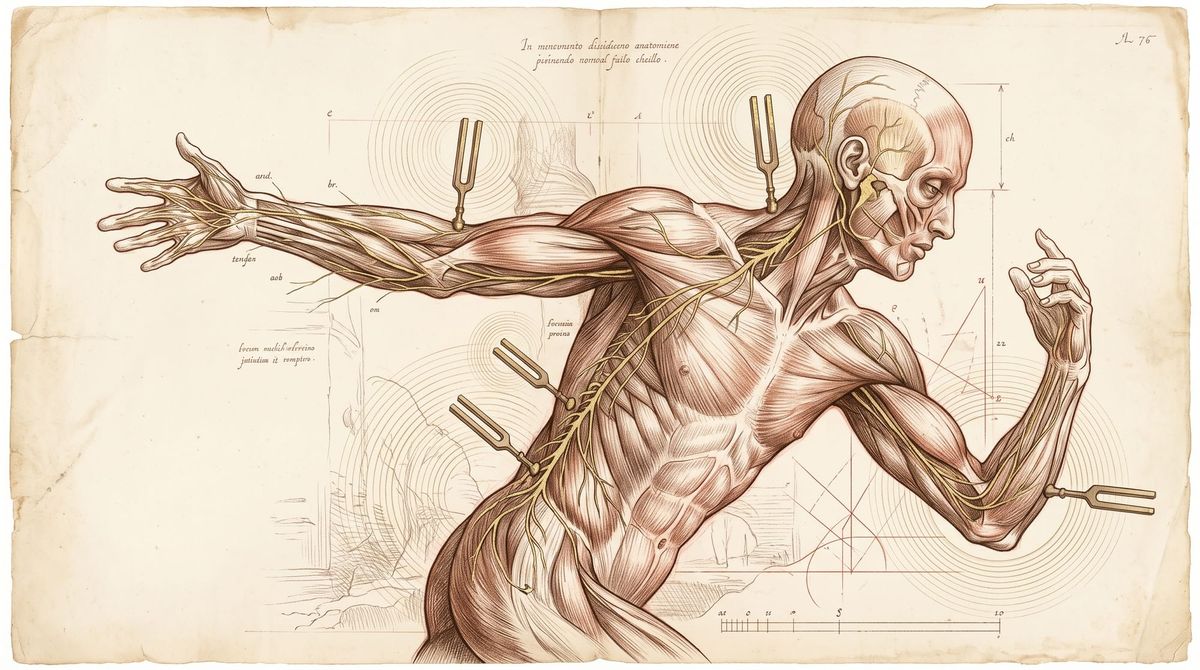
For the past 20 years, public conversation around brain–computer interfaces (BCIs) has been trapped in a false dichotomy. On one side, we have the vital clinical mission of restorative medicine, such as reading motor signals from the cortex to help a paralyzed patient move a robotic arm or type on a screen. On the other side, we have sci-fi fever dreams of "uploading" our minds to the cloud by cramming a Wi-Fi router into the Broca’s Region. [1]
Both framings miss the much weirder, much more immediate biological truth that the mammalian nervous system is not a fixed hardware motherboard with static input/output ports. It’s a peculiarly adaptive, rhythmically gated prediction engine. When you close the loop by feeding patterned electrical or acoustic signals back into the nervous system at the exact right millisecond, you don't just bypass broken wires. You can teach the spinal cord to heal itself, graft entirely new synthetic senses onto the cortex, and overclock the biological speed limits of human comprehension.
[1] Of course, I’ve never been one of those scifi weirdos dreaming of going full Monalisa Overdrive.
Research Roundup
A Neuroprosthetic That Puts Itself Out of a Job
Most motor neuroprosthetics act as one-way detours: they read movement intentions from the brain and route them around a spinal cord injury to drive an external device, robotic limb, or muscle stimulator.
A far more ambitious architecture—a "double neural bypass" (DNB)—was tested in a participant with chronic C4 sensory and C5 motor complete tetraplegia. The DNB processes intracortical recording with recurrent neural networks and reinforcement learning trained for fine grasp control. But it simultaneously uses patterned electrical stimulation of both the spinal cord and the somatosensory cortex along the very pathways the motor commands would have used.
This "cortical mirroring" produced extraordinary results. In real time, the bidirectional link allowed the participant to manipulate delicate objects and feed himself with his own hand. But more importantly, by synchronizing the patient’s top-down motor intentions with bottom-up spinal and cortical microstimulation, the participant recovered significant, lasting improvements in voluntary elbow flexion and wrist tactile sensation that persisted even when the neuroprosthesis was completely turned off.
By closing the sensorimotor loop, the machine didn't just replace lost function; it acted as a biological scaffold that coaxed dormant neural circuits into rebuilding themselves. Emerging neuromodulatory technologies can be used to recover and augment who we are [1], not just replace who we are.
[1] Yes, nerds, like the supersoldier serum.
The Sixth Sense…Cyborg Style
Can a mammalian brain learn to interpret a completely artificial data stream injected directly into its cortex and merge it seamlessly with its natural senses? Yes it can, and it’s cool a shit.
Start by implanting a 16-channel microwire array into the primary somatosensory cortex of freely moving mice. Then, train those cybermice to navigate to targets hidden on the floor of a chamber. Last, in some trials the target locations can be found via natural visual cues. In other, only clues were patterns of multichannel intracortical microstimulation (ICMS), an artificial "sixth sense" of cortical touch.
Within roughly 1,000 trials, the mice mastered their new artificial sense: on ICMS-only trials where targets were completely invisible to the eye, they navigated to the goals with 75% proficiency, matching or beating their performance with natural vision alone. [1]
Coolest to me, when natural vision and artificial cortical stimulation were paired, performance exceeded either sense alone. The mammalian cortex is not picky about where its likelihood distributions come from; give it a consistent, informative electrical pattern, and it will fuse synthetic data with natural sight to build a super-additive model of the world.
[1] Cyberdowsing!
Breaking Waves
Human speech comprehension hits a hard physiological wall across languages and cultures: once speech exceeds roughly 10 syllables per second, our ability to understand it collapses into gibberish. Why does that bottleneck exist, and can it be hacked?
Combining psychophysics, scalp EEG, intracranial stereo-EEG (sEEG), and high-definition transcranial alternating current stimulation (tACS), researchers traced this speed limit to the intrinsic alpha-band oscillations (8–12 Hz) of the left auditory cortex. Across healthy participants, an individual’s baseline endogenous alpha frequency precisely predicted the maximum speed at which they could comprehend speech.
But by applying noninvasive, high-definition tACS and rhythmic auditory stimulation to causally accelerate the endogenous alpha rhythms in the left auditory cortex, the comprehension bottleneck shifted upward. Participants could understand ultrafast speech that was previously unintelligible.
Direct sEEG recordings confirmed that faster local alpha rhythms allowed the auditory cortex to entrain more tightly to the compressed speech envelope. The speed limit of human verbal bandwidth isn't a fixed anatomical ceiling; it’s a local clock, and that clock can be tuned. [1]
[1] Attention and many other cognitive functions also have phasic patterns and might also be tuned. And more ambitiously, intercranial oscillations between 2 people seem to affect social interactions and might also be tunable.
Media Mentions
?
SciFi, Fantasy, & Me
?
Stage & Screen
- October 19-23, Warsaw: So much good stuff is in the works for my first visit to Poland: students, entrepreneurs, policy makers and more.
- I'm in Poland for the week: book me for an incredible talk and support our amazing work.
- October 24, London Town: A little interview with the BBC!
- October 26, Bonn: It's on in Bonn!
- October 28, Fayetteville, NC: This is a big maybe, but I've never spoken in North Carolina before.
- October 29, San Diego: ...or maybe I'll be at UCSD for a book talk.
- November 19, Bangkok: Finally back in East Asia!
- Anyone in Australia want to piggyback on that trip?
- December 7-8 NYC: The Kennedy Human Rights Center Gala!
- January 18, Davos: maybe
- February 3, Helsinki
- 2/8, SF
- 2/23, Orlando
- 3/3 Curicao
- 3/11, Toronto
- 3/11 London
- 3/15 Penn St
- 3/24 NYC
- 4/1 UMass
- 5/4 , Sao Paulo
- 5/7 San Diego
- 5/13 NYC
- 6/1 Chicago
- 6/29, UK