After 10 long years, pre-orders for Robot-Proof are live!
It’s fascinating. It’s terrifying. It’s funny!
Friends and Lab Partners,
Nearly 30 years ago, I built my first neural network. It was an undergraduate honors thesis designed to look at a human face and tell the difference between a real smile and a fake one. The CIA wanted lie detection—I built systems to help autistic children learn to read facial expressions and to reunite organ refugees with their faces.
As much as my scifi soul loved building AI, my greatest discoveries weren’t about what robots could do, but what we humans could accomplish when we choose to build better versions of ourselves.
I’ve used AI to help bipolar sufferers predict manic episodes, to lift education outcomes in students, and to hack my own son’s medical devices to manage his diabetes. I’ve spent my life exploring the distance between who we are and who we could be.
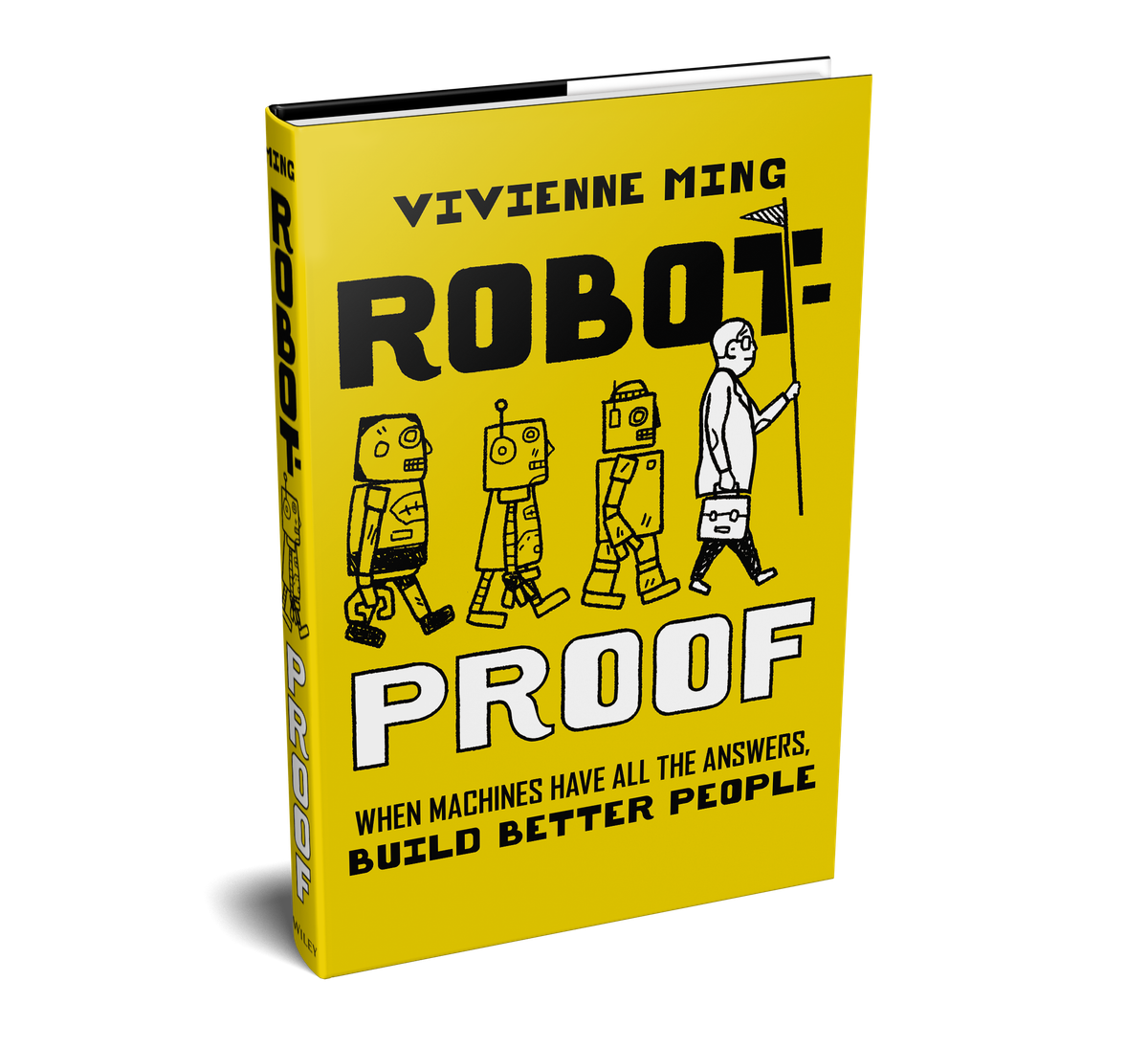
Today, I’m finally ready to share the manual for that journey. My new book, Robot-Proof: When Machines Have All The Answers, Build Better People, officially launches on March 17th.
The Growing Chasm
As I prepare to head to Davos for the World Economic Forum next week, the conversation is dominated by AI. But there is an ugly truth we aren’t talking about enough: the widening chasm between the elite 5% who are being "augmented" by these tools and the vast majority of humanity who are being threatened by them.
Robot-Proof isn't a textbook on machine learning. It’s a book about human agency. It’s about how we stop competing with machines and start cultivating the messy, creative, and resilient qualities that make us "Robot-Proof" [1].
The "NPR" Model: Support the Science
You can pre-order the book at Amazon or Barnes & Noble today, and I truly appreciate every sale. But if you value the independent research my team and I do, I’m asking you to consider joining our Academy of Mad Scientists directly.
My work has always been independent. It isn't funded by corporate grants or venture capital; it’s funded by people who believe that science should serve humanity. By supporting the book directly through my site, you are funding our current "ill-posed" projects [2]:
- The ORA Project: Using hybrid intelligence [3] to promote pluralism and counter polarization in the EU and US.
- The Human Trust: Building the first "Foundation Model for Human Development" [4] to predict and improve life outcomes for kids globally.
- Possibility Sciences: Not just accelerating scientific discovery but also forecasting the human developmental impact of new policies and technologies.
Choose Your Level of Impact:
🧪 The Lab Partner ($60/year)
Support the research and I’ll send you a signed first edition of Robot-Proof (US only). You’ll also get "Voting Rights" on our next curiosity projects, access to "The Lost Chapters" edited out of the manuscript, and my deep gratitude. Subscribe as a Lab Partner!
🚀 The Founding Patron ($250 One-time)
For those who want to maximize their impact. In addition to your personally dedicated copy of the book and digital access to "The Lost Chapters" & research PDFs, your contribution will directly support my free lectures and classes at underserved schools and youth organizations. I will include your name on a dedicated 'Founding Patron' slide in every pro-bono talk I give this year, so those students know exactly who invested in their future. Become a Patron!
Building a better world is a collective effort. Whether you buy the book, join the Academy, or simply share this research with a friend, thank you for being part of the experiment.
Keep being human! As bad as we are at it, the machines are even worse.
Vivienne
[1] There are whole chapters just on meta-learning and how to develop these qualities in kids and yourself!
[2] well-posed: we know the answers; ill-posed: we don’t even know the questions.
[3] hybrid human-machine collective intelligence: happy cyborgs or a dismal Eloi?
[4] Come on…just read the book, and it’s many snarky footnotes!