The Teen Fertility…Crisis?!?

Four new studies suggest the fertility decline is less about the cost of children than about the connections that come before them.
For half a century, the standard explanations for falling birth rates have pointed at the price of parenthood: housing, childcare, the economy, the spread of contraception. But the U.S. general fertility rate has dropped 22% since 2007 alone, straight through a long economic boom, and the usual suspects can't quite account for it. Four recent studies, including a new working paper from a Nobel laureate, suggest we have been looking in the wrong place. They shift the story upstream: before you can explain missing babies, they argue, you have to explain missing couples, missing dates, missing hours spent in the same room. Fertility, in this telling, is the last link in a chain of human connection that’s weakening at several points at once.
Research Roundup
Collective Bargaining?
Rich-world birth rates have sat below replacement since the mid-1970s. 2023 Nobel laureate Claudia Goldin's explanation is less economic than relational.
As women gained autonomy—education, careers, the pill—they moved toward a broader life faster than men's willingness to surrender traditional expectations at home. The result is a mismatch: women increasingly benefit from shedding old roles, while men often still benefit from keeping them.
When and where a woman can't count on a partner to share the domestic and caregiving load, some delay children and others forgo them. Tellingly, the steepest declines aren't in the earliest-modernizing countries but in fast-changing ones like Italy, Japan, and South Korea, where autonomy arrived quickly and tradition didn't bend to meet it. This is the slow tide beneath everything that follows.
This a data rich paper but deep in the connecting-the-dots end of research [1]. It's a theory-driven exploration without a single clear experiment to fully address any doubts. But take smart people seriously—they are good at fooling themselves but even better at exploring messy possibilities.
[1] Much of my research lives there as well. The people doing the hard work of incremental experimentation generally think we are lazy. (Not untrue!)
The Shock & The Tipping Point
Did the smartphone accidentally become the most potent contraceptive of the 21st century? A pair of striking recent papers suggests the answer might be yes.
The first paper exploits a unique quirk of US tech history: between 2007 and 2011, the iPhone was sold exclusively through AT&T, whose 3G mobile-broadband network expanded unevenly across the country. This patchy rollout created a rare natural experiment, allowing researchers to compare otherwise similar counties that got early smartphone access against those that had to wait.
The arrival of the iPhone alone accounts for somewhere between a third and a half of the total drop in U.S. general fertility among women aged 15 to 44. The complex cultural shifts that were causing a slow drop in fertility since the 70s, gave way to simple displacement: smartphones replaced face-to-face time [1], increased pornography consumption [2], and reduced the frequency of sex. [3]
While the first paper looks at general adult fertility in America, the second paper zooms out globally and zeroes in on teenagers, whose fertility didn't just dip but fell off a cliff across 128 countries with radically different economies, welfare systems, and abortion laws.
The authors model this as a "coordination tipping point". Once a critical mass of teens moved their lives onto screens, the phone became where social life happened, and in-person hanging out collapsed as a cultural norm.
Time-use diaries tell a dramatic story: face-to-face socializing among teens roughly halved, while digital leisure tripled. With the death of unstructured, unsupervised hangouts went the main scenarios in which unplanned teen pregnancies occur [4].
To prove causality, the authors used rugged terrain (where laying broadband cable is vastly more expensive) as a natural lever, finding the exact same pattern in both the U.S. and the UK.
Taken together, these studies suggest that the post-2007 baby bust wasn't simply driven by economic anxiety or changing values about family size. Instead, it was a fundamental shift in daily human proximity.
The second paper ends with a sobering coda: the exact same digital shift that predicts the collapse in teen fertility also predicts the recent, tragic rise in teen suicides. Replacing the physical world with screens didn't just change how many babies we have—it fundamentally restructured adolescent life itself.
[1] It turns out teens need more than “Facetime” to find themselves in a shotgun wedding.
[2] Hmmmm… I was on the internet in the mid1990s. The 2007 iPhone was not the sudden porn shock the authors seem to imply.
[3] As a reality check, the authors ran the same model on Verizon’s and Sprint’s networks during those same years yields no effect at all.
[4] The lyrics to every John Mellencamp song become rather dismal in a post-iPhone world. “"Scrollin' through their TikTok feeds, eating DoorDash in their rooms // Diane’s on a FaceTime call, Jack is muted on a Zoom..." Admittedly, “suckin’ on a chilidog” never really sold me the small town experience.
Risky Business
This week I’ve looked at how the stresses of changing cultural norms and technology shocks have altered pregnancy rates around the world. Here’s one last study that focuses instead on consent laws.
European countries that adopted tacit-consent standards for sexual assault show a roughly 4% dip in fertility afterward, along with less couple formation.
The proposed channel is behavioral: when the rules around consent grow less certain, the most risk-averse people pull back from dating. This leaves a less cautious pool behind—a shift that surfaces in lower contraceptive and condom use [1].
As evidence of the underlying ambiguity, the author finds that unanimous guilty verdicts in Swedish appeals courts dropped sharply after that country's reform. It is a delicate finding—just one recent study of a charged subject—and best read as a claim about how people respond to legal uncertainty, not as a verdict on the laws themselves.
[1] Fewer human babies; more gonorrhea babies—not a good trade-off.
Stop Being Weird About Babies
Amidst all the demographic hand-wringing [1], we should start by stating the obvious: the collapse of teen pregnancy is an unequivocal win. Fewer teenagers facing life-altering, unplanned parenthood is a victory for health, education, and social mobility that we should celebrate without reservation. It is truly disturbing to not hear this clearly from across the political map.
The real demographic challenge isn't teenagers skipping the backseat—it's that millions of adult, professional women who want families are looking at the math and deciding they simply can't afford the career penalty or the uneven domestic load. If policymakers want a hopeful way forward, the answer isn't nostalgia or panicking over screens; it's actively reshaping society so that motherhood and ambition are no longer at war. That means combined policies to make parenting AND work more appealing. (One of the others alone doesn’t solve this problem.)
Invest in high-quality universal childcare and early education. Design non-transferable paternal leave that nudges domestic equity into the modern era. Protect flexible career tracks. When policy systematically lowers the structural tax on mothers' autonomy, having a family stops looking like a risky trade-off and starts looking like a welcomed choice.
[1] No, the end is not near any more than Disco record sales have followed a trend ending in 1979. It amazes me that some economists who regularly say, "The world is dynamic; we'll figure out climate change when we need to," are also saying, "Ahhhhh! Ahhhh! It's Children of Men! South Korea will be an empty wasteland in 50 years!"
Media Mentions
More podcast fun! Here's my episode, “How to Make Yourself and Your Kids AI-Proof with Vivienne Ming”, on the Feel Good Podcast with Kimberly Snyder.
And even more: Top Neuroscientist Says AI Is Making Us DUMBER?
SciFi, Fantasy, & Me
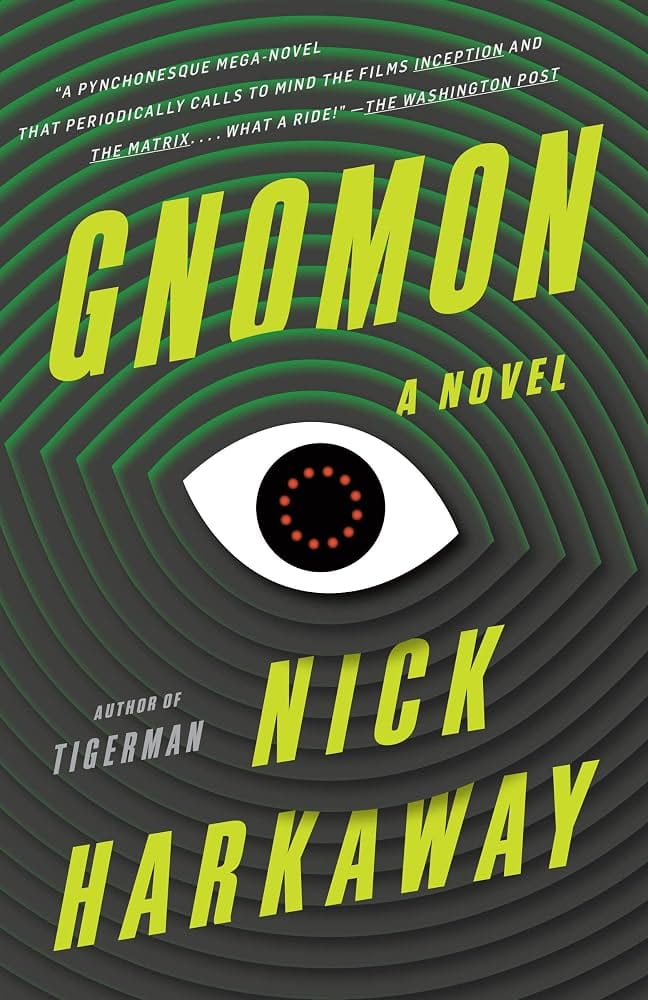
This has been strongly recommended to me. Let's give it a try.
Stage & Screen
- September 8, Online: How might AI change the world of investing?
- September 15, SF: Innovation Day with INSEAD!
- September 16, DC: AI and education–beyond dreams and dread.
- September 19, Phoenix: I'm giving the keynote for the Association of Science & Technology Centers annual conference.
- September 21, Stanford: We're still working on the details, but hopefully I'll be talking about my research on machine learning and neurodiversity for Stanford's Neurodiversity Project.
- September 24, UC Berkeley: It's my annual Berkeley Change-makers Lecture!
- September 29, Cincinnati: Still baking...
- September 30, Irvine: Hybrid Intelligence for innovation!
- October 6, SF: UCSD Alumni Association
- October 6, SF: Giving a talk at the Draper Richards Kaplan Foundation
- October 6, Park City: It's Robot-Proof in the Rockies with setups.
- October 21-23, Warsaw: So much good stuff is in the works for my first visit to Poland
- October 27, Cologne: Maybe, maybe a visit to Germany!
- October, Toronto: The Future of Work...in the Future
- November 19, NYC: Secrets in the dark!